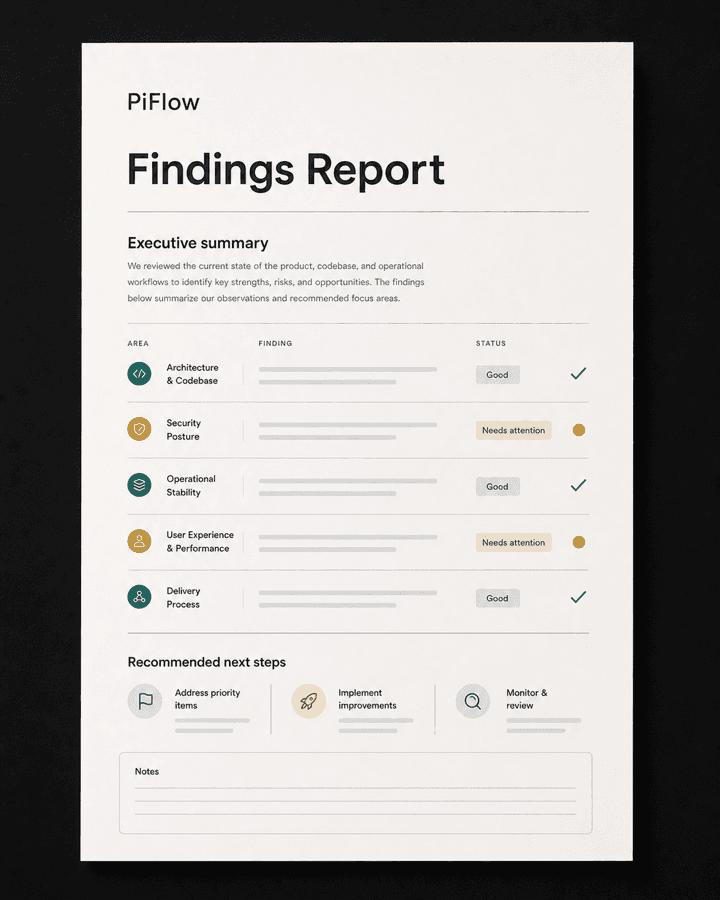
Illustrative Technical Discovery report
Risk findings, priorities, evidence, and recommended next steps.
View sample reportTrust is part of delivery
Web app work can involve code, credentials, hosting, customer data, and production systems. PiFlow reduces that risk with scoped access, written checks, client-owned accounts where practical, and a clear handoff record.
Access, ownership, verification
The exact implementation changes by scope. The ownership and verification questions do not.
Client-owned platform accounts are preferred where practical. API keys, payment credentials, and environment variables do not belong in public forms or ordinary email.
PiFlow asks for the narrowest practical access, uses production access deliberately, and records when it should be removed or handed back.
Monitoring is configured to surface the evidence needed to debug and operate the app - not to collect personal information without a delivery reason.
When multi-tenant access is in scope, authorization is checked at server and database boundaries rather than treated as a visual UI state.
Automated checks can support delivery, but PiFlow reviews the agreed scope, QA evidence, deployment state, and known limits before handoff.
The closeout identifies environments, credentials, monitoring, known issues, support status, and the party responsible for the next action.
Engagement sequence
Existing apps begin with a free maintenance review when they are stable and clear, or Technical Discovery when they are fragile, stalled, undocumented, hosting-stuck, or otherwise uncertain.
Confirm the app state and the smallest safe starting path.
Document required access, who owns each account, and how credentials will be shared.
Use the narrowest practical access for the accepted scope.
Record findings, QA evidence, known limits, and handoff actions before responsibility changes.
PiFlow-owned samples
These are PiFlow-owned illustrative samples. They show structure and depth without implying client work or results.
Risk findings, priorities, evidence, and recommended next steps.
View sample report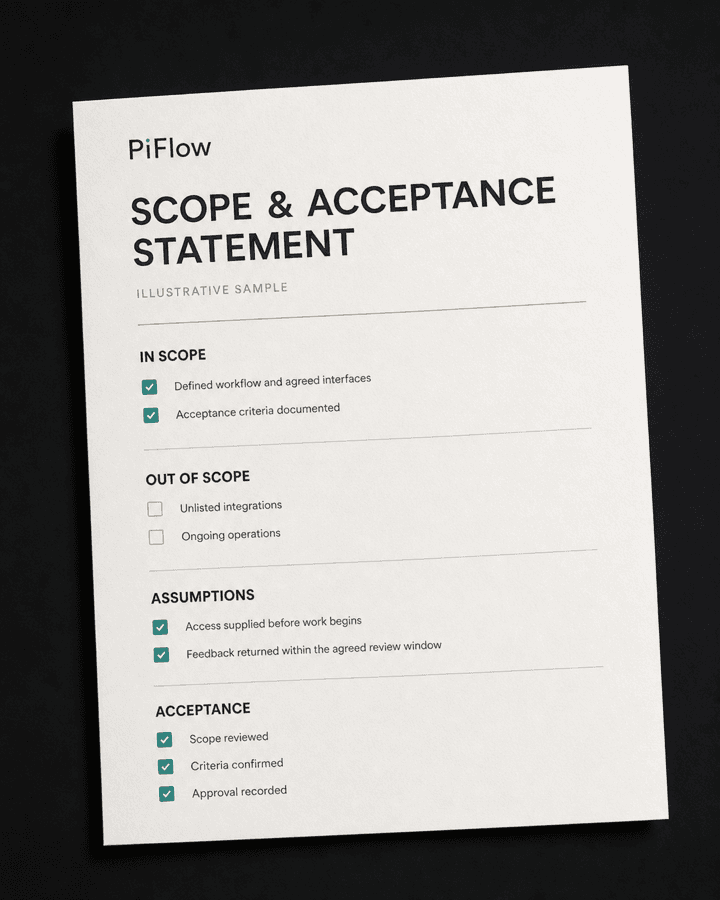
Included work, exclusions, acceptance criteria, and decision points.
See the scoping worksheet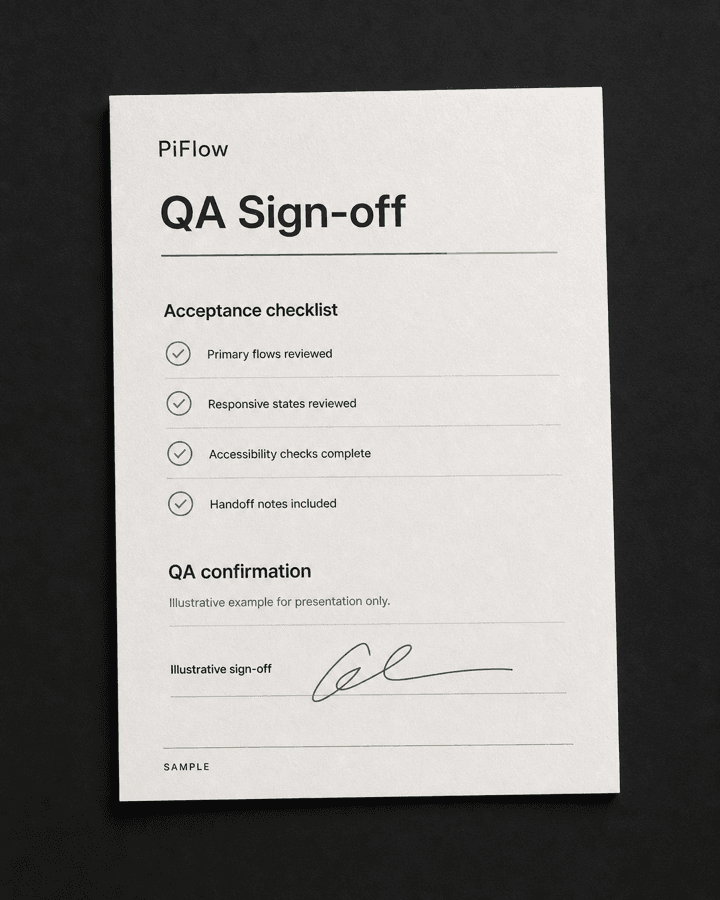
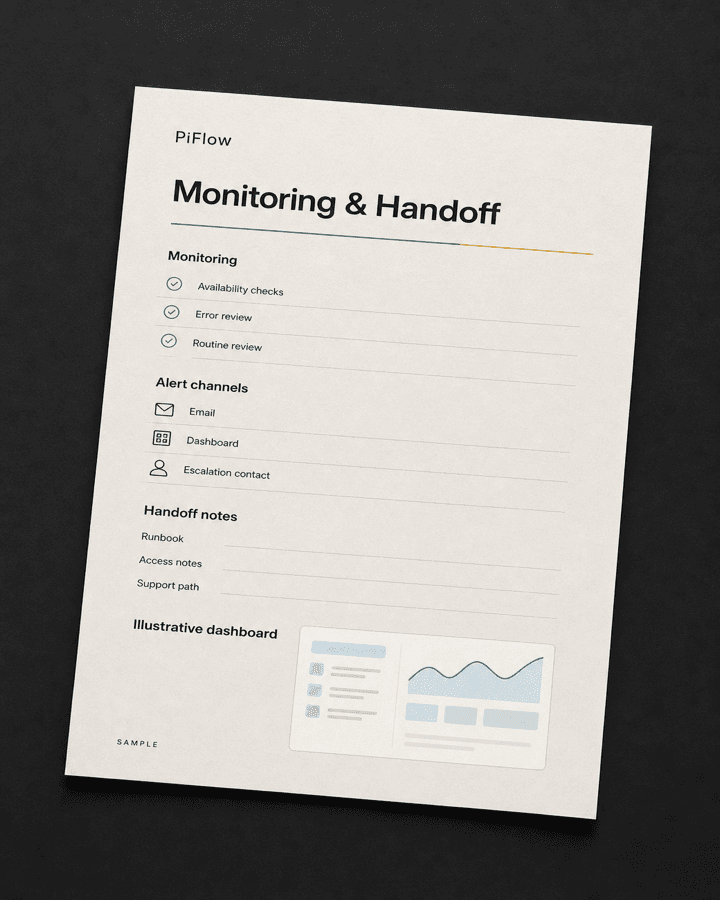
Environment, monitoring, credential, and responsibility notes.
See the handoff checklistCommercial clarity
Pricing, scope, payment timing, change orders, exclusions, support status, and any applicable refund checkpoint are documented in the relevant proposal, SOW, or subscription confirmation.
Scope and acceptance
The agreed outcome and its limits are recorded before delivery begins.
Day-5 checkpoint
Eligible new-build sprints use the SOW-backed refund checkpoint and its stated conditions.
Credential responsibility
Account ownership and access expectations are recorded, not assumed.
Next-step status
Support, follow-on work, a pause, or handoff is made explicit at closeout.